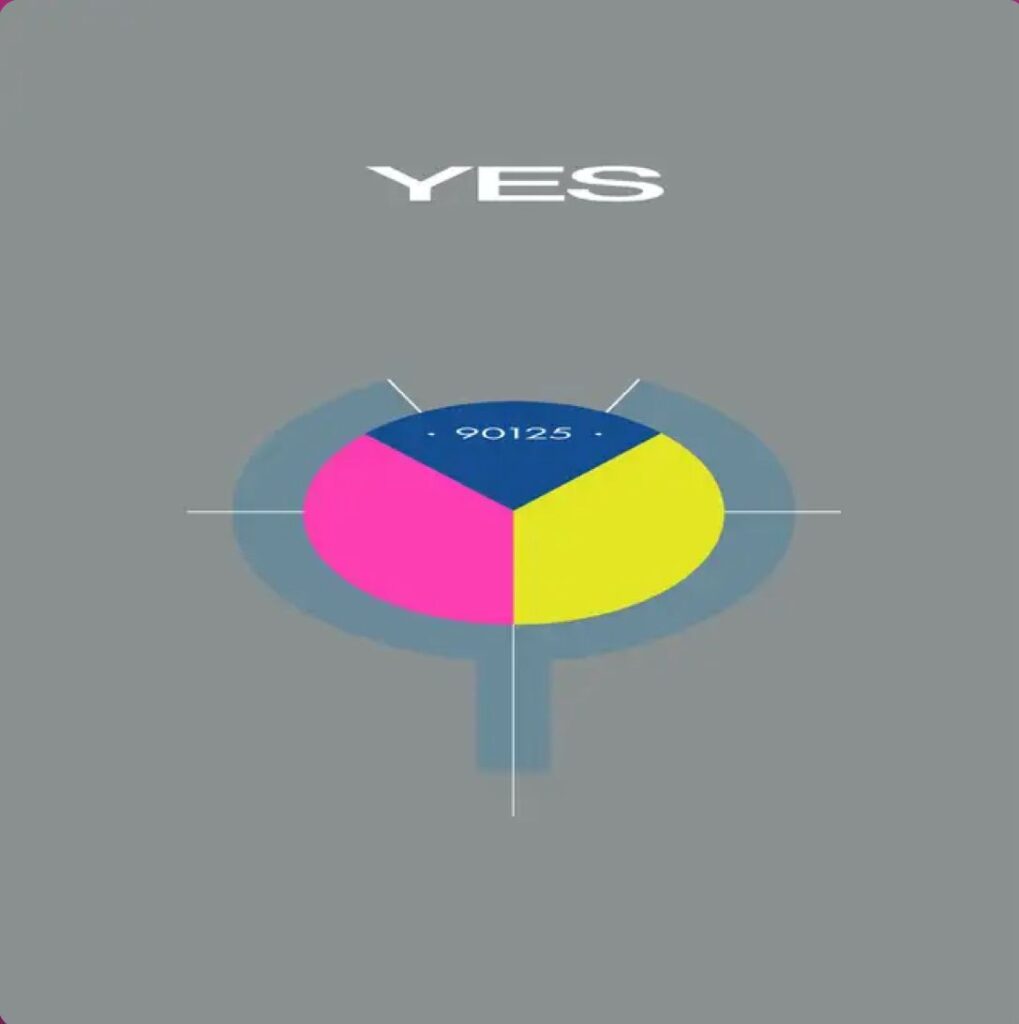
Yes should not have lasted past the 1970s. With their their pipe-organ interludes, their fantasy-novel cover art, their lead singer like a Baroque-era castrato, their 20-minute songs about the meaning of life and origins of the universe, they were exactly the sort of band that punk and its progeny were supposed to kill off. Compared to their peers at the vanguard of progressive rock, for attributes that might have helped them thrive in the coming decade of cocaine and drum machines, they had neither Genesis’ secret fondness for hooks nor King Crimson’s temerity to poach a guitarist from the Talking Heads. What they did have were a couple of guys named Trevor.
The band had been near collapse before the Trevors showed up. In 1979, singer Jon Anderson left in a huff over his bandmates’ new enthusiasm for streamlined hard rock and indifference to the elaborately theatrical material he’d been writing. One Trevor was brought in to replace him for an album and a tour, and when he didn’t work out, they called Trevor number two, who didn’t even get to cut a record before Anderson returned to the fold, ready to experiment with a sleeker approach. The second Trevor was Trevor Rabin, a former teen idol in his native South Africa, who took up guitar, keyboards, and much of the songwriting in this reshuffled version of Yes. The first Trevor, in the time since his exile as frontman, had become the hottest pop producer in the UK.
Before Yes, Trevor Horn had fronted the Buggles, responsible for the first video ever played on MTV. After getting kicked out of Yes and realizing he was more cut out for producing than performing, he refashioned a duo called Dollar from bland second-class pop strivers into boundary-pushing hitmakers and critical darlings, made one of the young decade’s best albums with ABC, introduced his country’s airwaves to hip-hop via his production for Malcolm McLaren, and became the bespectacled avatar of New Pop: the idea, sweeping the British charts at the time, that pop could be commercial and aspirational and artistic and subversive all at once. Yes had the good sense and the gall to ask him to come back and produce their new record. He was well on his way to becoming one of his era’s greatest musical auteurs; they were old farts who had fired him two years before. He said yes. His wife was furious.
“Owner of a Lonely Heart” started life as a series of Trevor Rabin demos. You can hear them on an outtakes collection Rabin released in 2003: The guitar riff is already there, in all its blunt efficiency, and so is the seductive three-note ascent of the chorus. Horn heard one of the demos by chance after Rabin accidentally left a tape playing while going to the bathroom. The producer was desperate to give Yes a hit, fearing that the industry would cast him out as quickly as it had embraced him if his hubris in taking these prog-rock dinosaurs as clients didn’t pay off. He was convinced that Rabin’s demo could be the one. There was only one problem. “The verses of it were so awful,” he told an interviewer in 2011, “that I was convinced that if we didn’t put loads of gags and whizbangs all over the verse, no one would ever listen to it.”
Those gags and whizbangs included sampled horn stabs and gunshots, arpeggios that sounded like haywire computers, angelic harp runs, and synthetic choirs chanting from the bottom of a digital abyss. Horn was one of the first musicians to buy a Fairlight CMI, the world’s first digital sampler. He immediately saw that its real potential lay not in faithfully emulating acoustic instruments, the way its manufacturers thought it might be used, but in the service of willful, glorious fakery: sounds whose envelopes of attack and release were more extreme than anything found in nature, with not enough echo or way too much of it; sounds like little cartoons of spring-loaded boxing gloves, punching their way to the front of the mix.
Maybe it was the mutual trust that Horn had with Yes as a onetime member of the band; or a sense that their music—with its own outlandish sonics, jarring interruptions, intricate riffs played once and tossed away—had more in common with his channel-surfing vision of pop than the average listener might have realized. Maybe he was so driven for a hit that he’d try anything. Whatever the case, this collaboration with a band past its sell-by date is his single most audacious production, marking the moment he went from being a promising producer to an era-defining one. It’s also one of the craziest-sounding records ever made, period. Forty years on from its release, it still startles, coming off more like the Bomb Squad’s overstuffed productions for Public Enemy from a few years later, or Girl Talk’s candy-colored agglomerations of pop detritus from a couple of decades after that, than anything ever released under the banner of prog. Even the real instruments—the bricklike main riff, the spacious palm-muted lines, the toxic-sludge guitar solo—have been made to sound like samples in Horn’s collage: compressed, EQed, gated, and snapped to the grid, either digitally or through the metronomic precision of the players themselves.
Horn’s contributions to “Owner of a Lonely Heart” have earned Yes an unlikely place in the pantheon of hip-hop and electronic music history. No less an authority than Questlove has written that it contains the first-ever example of a drum beat sampled from another record, an innovation prefiguring everything from boom-bap to drum’n’bass. In its opening seconds, and again in the instrumental break, there are a few Fairlight-warped fragments of the drums from Funk, Inc.’s “Kool Is Back.” Through his work with McLaren, Horn had spent time around New York hip-hop DJs, who were already doing their own live and analog form of sampling by beat-juggling across two turntables; that he got to it first on record probably has as much to do with the Fairlight’s $25,000 price tag as anything else. Still, “Owner of a Lonely Heart”’s influence on sample-based music is deep. Art of Noise, one of the most important electronic music groups of the ’80s, arose directly out of the recording sessions, when Horn and a group of engineers and arrangers on his team realized that the production territory they were staking out could be the basis of a whole new project.
For YES
APPLE MUSIC – SPOTIFY – DEEZER