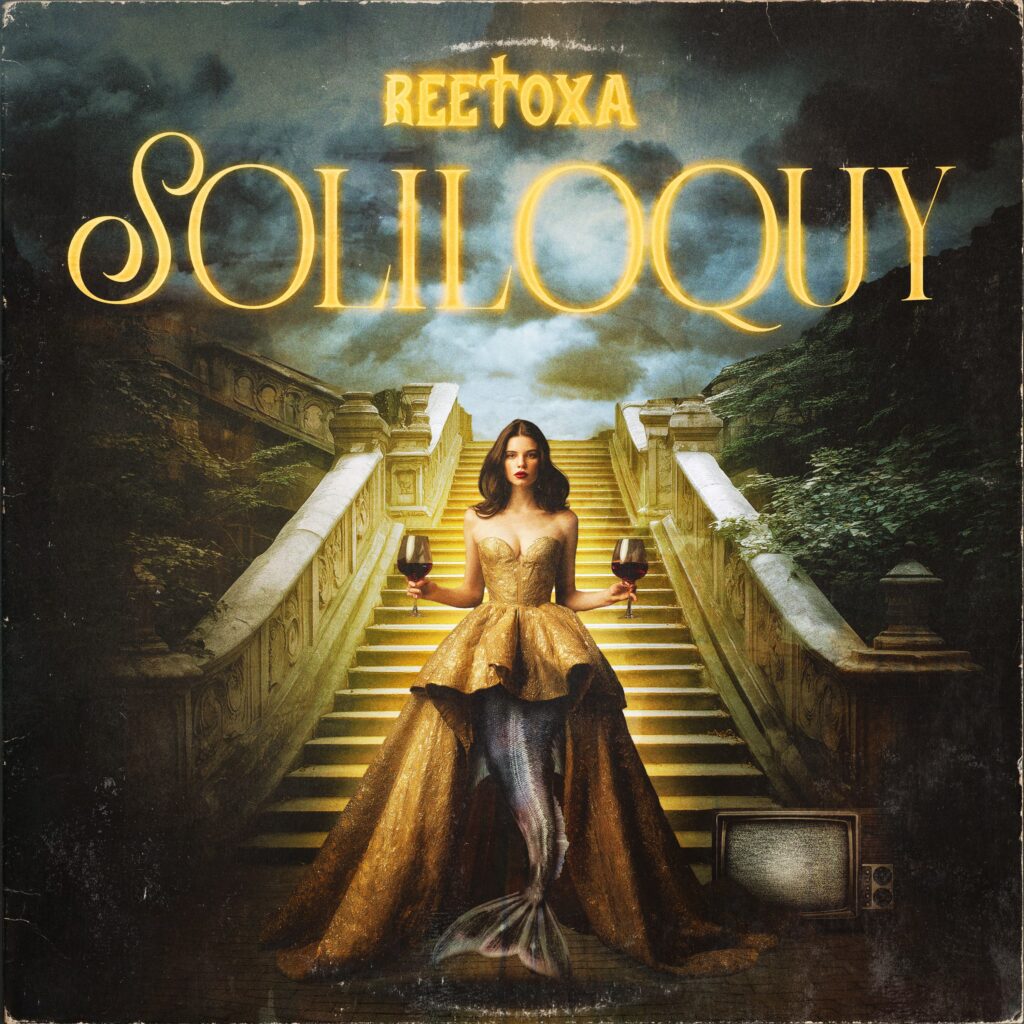
ReeToxA’s Soliloquy is an excavation site of memory, trauma, addiction, survival, and artistic persistence. Created by Melbourne-based songwriter Jason McKee, the project carries the weight of nearly three decades of unfinished thoughts, abandoned demos, and life experiences that repeatedly interrupted the creative process. McKee first began writing material for this record in 1997, but prison time, personal tragedy, and the loss of his mother delayed its completion for years. It took the isolation of the pandemic for him to revisit a sprawling archive of songs and shape them into this ambitious twenty-six-track double album. That history matters because you can hear it in every corner of Soliloquy. Nothing about the album feels rushed or artificially polished. Instead, it sounds weathered, reflective, and emotionally lived-in, as though every lyric had to survive real life before earning its place on the record.
From the opening self-titled track “REETOXA,” the album establishes its uncompromising alternative rock identity. Thumping drums and gritty guitars crash forward with a dark intensity that immediately recalls the raw spirit of 90s Australian rock while still feeling modern in execution. “INSATIABLE” follows with restless energy, capturing the hunger and frustration of creative obsession through driving rhythms and McKee’s rough-edged vocal delivery. There is an urgency running through these early tracks that mirrors the album’s long gestation period, as if decades of unspoken emotion are finally spilling outward. Yet even in its heaviest moments, Soliloquy avoids sounding chaotic for the sake of it. The production, guided by ARIA-nominated producer Simon Moro, balances grit with atmosphere, allowing the emotional core of the songs to remain front and center.
One of the album’s greatest strengths is its ability to pivot between aggression and introspection without losing cohesion. “AKAROA” slows things down dramatically, drifting into atmospheric territory with reflective undertones and spacious production that creates an almost meditative mood. It feels like stepping outside after emotional confrontation and staring into open sky. Then comes “BOTTLE,” perhaps one of the album’s most significant tracks given its origins in 1997. The song functions as a bridge between McKee’s younger and older selves, confronting themes of addiction, dependency, and the passage of time with brutal honesty. Because the material has aged alongside its creator, there is an authenticity here that cannot be manufactured. You are not hearing someone trying to recreate youthful pain decades later—you are hearing pain that survived the years intact.
Throughout the middle stretch of the album, McKee proves himself to be a remarkably cinematic songwriter. “DANCING WITH LOU” glides forward with noir-rock energy, feeling like the soundtrack to a lonely midnight walk through rain-soaked city streets. “THRIFT SHOP DRESS” injects lighter energy through vivid riffs and playful storytelling, offering a welcome contrast without disrupting the emotional momentum. Meanwhile, “THE LISA SONG” and “JOSEPHINE” showcase McKee’s talent for turning deeply personal memories into universally relatable narratives. These tracks feel intimate and conversational, grounded in character details rather than abstract poetic gestures. There is something deeply human about the way McKee writes—his songs do not posture or exaggerate. They simply observe, remember, and confess.
Emotionally, Soliloquy reaches some of its most affecting moments with tracks like “GOWN,” “TRUCE,” and “ALCOHOL 2.” “GOWN” unfolds slowly, mirroring themes of transformation and emotional shedding through gradual instrumental build-up. “TRUCE” strips the energy back even further, giving space to the weary texture of McKee’s voice, which often carries more emotional weight than the lyrics themselves. Then there is “ALCOHOL 2,” one of the album’s most vulnerable tracks, confronting recurring cycles of addiction without self-pity or melodrama. The honesty here is almost uncomfortable at times, but that discomfort is precisely what makes the song resonate. McKee does not romanticize his struggles; he documents them plainly, allowing listeners to feel the exhaustion, shame, and resilience embedded within them.
Musically, the album continuously expands beyond straightforward alternative rock. “ERICA AND THE STARS” introduces sweeping orchestral arrangements that add emotional grandeur without overpowering the intimacy of the songwriting. “TIMOR LESTE” begins delicately with piano before swelling into a cinematic string-heavy composition that feels almost filmic in scale. These moments reveal the sophistication of the album’s production and arrangement choices. Real instruments dominate the sonic landscape, giving the music warmth and texture often missing from overly digitized modern rock records. The orchestral flourishes never feel decorative—they deepen the emotional atmosphere and reinforce the album’s themes of memory, identity, and survival.
As the record progresses toward its final stretch, it becomes increasingly experimental and emotionally intense. “SCHITZO WALTZ” uses shifting time signatures to reflect emotional instability and psychological fragmentation, while “PURPLE VEIN” drags listeners back into darker, heavier territory with grinding guitars and suffocating tension. “WAR KILLER” stands as one of the album’s most aggressive moments, channeling rage and unease through menacing instrumentation and sharp vocal delivery. Yet even amid the darkness, McKee never loses sight of melody. Tracks like “LOVE KEEPS BURNING STILL” and “GIRLS ROCK” inject bursts of resilience and rebellious energy, preventing the album from collapsing entirely into despair. These moments of light matter because they make the darker sections feel earned rather than performative.
The emotional climax of Soliloquy arrives in its final sequence of tracks. “WAKE UP LUCY” introduces psychedelic textures and dreamlike melodies that feel suspended between exhaustion and hope. “STRONG” strips things back emotionally and sonically, allowing the lyrics and vocal performance to carry the full weight of survival and endurance. It is one of the album’s most powerful statements because of its restraint. After twenty-five tracks of emotional excavation, McKee no longer needs to shout to make his point. By the time “ALRIGHT” closes the album, the feeling is not one of triumphant resolution but hard-won peace. The song feels like the deep breath taken after years of internal turbulence—a quiet acknowledgment that survival itself can sometimes be enough.
Ultimately, Soliloquy succeeds because it feels less like a traditional album and more like a life archive carefully assembled over decades. Jason McKee has distilled nearly thirty years of experiences into a body of work that values honesty over perfection and emotional truth over commercial immediacy. The record is undeniably ambitious, and at twenty-six tracks it demands commitment from the listener, but that commitment is rewarded with depth, texture, and emotional resonance rarely found in contemporary rock releases. Rather than chasing trends or polish, ReeToxA embraces rawness, imperfection, and vulnerability, allowing the music to breathe naturally. Soliloquy is not designed for casual consumption—it is meant to be lived with, reflected upon, and revisited. In doing so, Jason McKee has created a double album that feels deeply personal yet universally human, proving that some stories simply take decades to tell properly.